A Complete Guide for Police, Tow & Utility Upfitting Vehicles
Introduction
Building the ideal fleet is about far more than selecting vehicles—it’s about creating a system that delivers consistent performance, safety, efficiency, and long-term return on investment. For organizations operating police units, tow and recovery trucks, or utility service vehicles, every decision—from vehicle selection to equipment integration—has a direct impact on daily operations.
Whether you’re launching a new fleet, expanding your current one, or upgrading outdated vehicles, this guide will walk you through how to build a fleet that’s not only functional—but optimized.
Why Fleet Planning Matters More Than Ever
Fleet operations today are more complex than ever. Rising fuel costs, increased safety expectations, stricter compliance requirements, and growing demand for efficiency mean that organizations can no longer afford to take a reactive approach.
Instead, the most successful fleets are:
- Purpose-built for specific tasks
- Standardized for efficiency
- Equipped with modern technology
- Designed for long-term cost control
The result? Lower downtime, improved safety, and stronger performance across every vehicle.
💡 Pro Tip
Reach out to a Mega Tech representative who understands fleet requirements and can provide solutions that meet you specific needs
Step 1: Define Your Fleet Requirements
Before selecting vehicles or equipment, clearly define how your fleet will be used. This ensures every decision is aligned with real operational needs.
Police, tow, and utility fleets all operate in different environments and require different capabilities. A patrol vehicle needs visibility and communication systems, while a utility truck needs organization and mobile workspace functionality.
Focus on:
- Daily workload and job requirements
- Operating environment (urban, highway, off-road)
- Safety and visibility needs
Step 2: Choose the Right Vehicle Platform
The vehicle platform is the foundation of your fleet. It must support both your equipment and long-term usage demands.
When evaluating options, look beyond upfront cost and consider how the vehicle performs over time. A platform with limited electrical capacity or payload can restrict your ability to properly outfit it.
Prioritize:
- Payload and weight capacity
- Electrical system compatibility
- Durability and lifecycle performance
A strong platform ensures your fleet vehicle setup can evolve as your needs grow.
Step 3: Fleet Equipment Selection by Industry
Choosing the right equipment is where fleet outfitting becomes operational. Each industry has unique requirements that should guide your decisions.
Police Vehicle Equipment
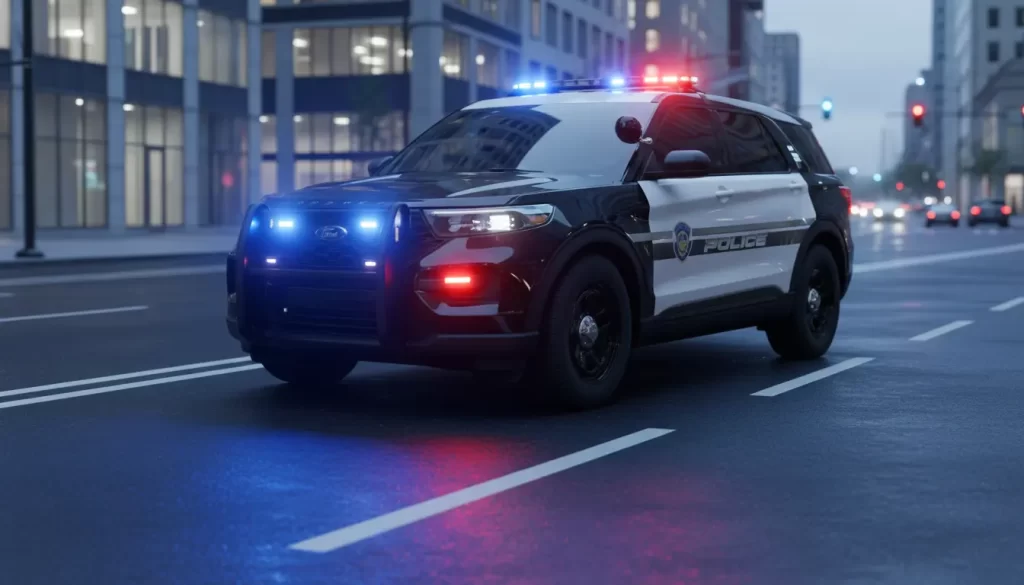
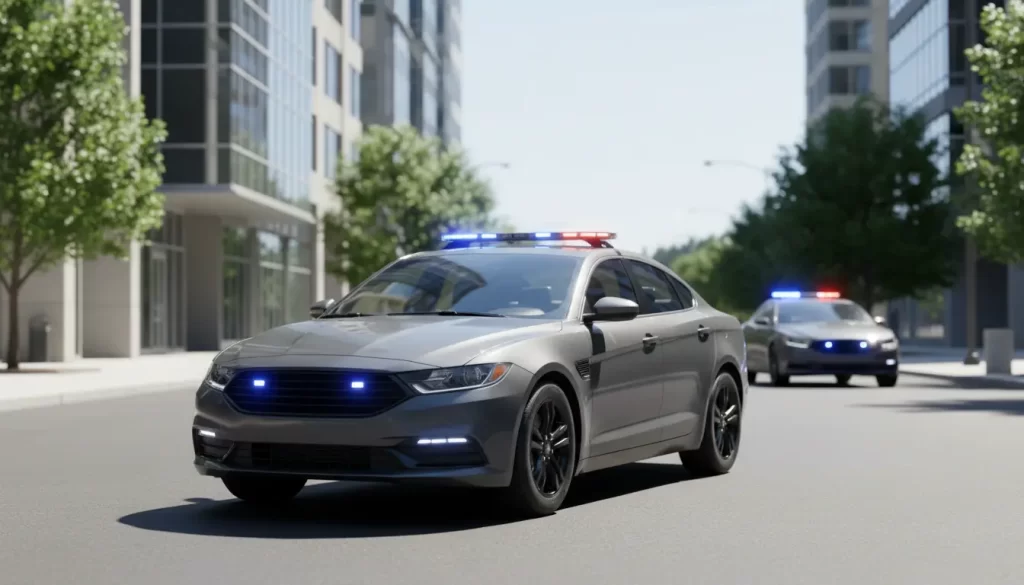
Police fleets require systems that support rapid response and officer safety. This includes high-visibility lighting, sirens, and communication tools that function reliably under pressure.
Tow Truck Outfitting
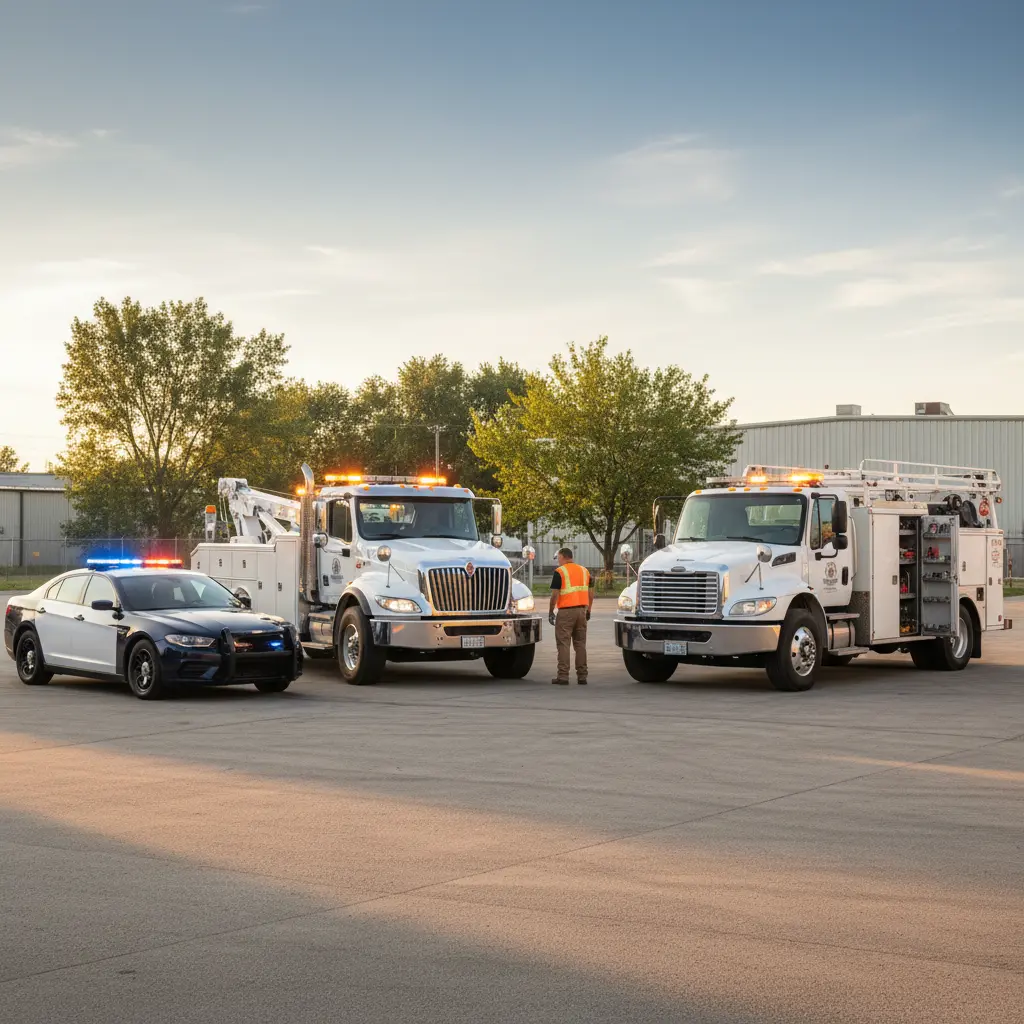
Tow and recovery fleets operate in high-risk roadside environments. Visibility and durability are critical, with heavy reliance on lighting systems and traffic control equipment.
Utility Fleet Vehicle Setup
Utility fleets function as mobile workstations. Organization, storage, and power solutions help technicians work efficiently and reduce time on site.
Key focus areas:
- Safety and visibility systems
- Industry-specific equipment
- Long-lasting, durable components
Step 4: Budget vs Performance in Fleet Outfitting
One of the most important decisions in fleet vehicle outfitting is balancing cost and performance. Lower-cost equipment may reduce upfront investment but often leads to higher long-term expenses.
Investing in quality equipment reduces:
- Downtime
- Maintenance costs
- Safety risks
The best strategy is to invest heavily in safety-critical components while optimizing spend in less critical areas.
Step 5: Understanding the Fleet Upfitting Process
The fleet upfitting process involves installing equipment into vehicles in a way that ensures performance, safety, and reliability. Proper planning is essential to avoid delays and costly rework.
Most fleet upfitting timelines include:
- Planning and specification (2–4 weeks)
- Equipment sourcing (2–6 weeks)
- Installation (1–3 weeks per vehicle)
Early coordination ensures your fleet is deployed efficiently and without disruption.
Step 6: Standardizing Your Fleet Vehicles
Standardization improves efficiency across your entire fleet. By using consistent equipment and layouts, organizations can simplify operations and reduce long-term costs.
Benefits include:
- Faster maintenance and repairs
- Easier training for operators
- Consistent performance across vehicles
For growing fleets, standardization is critical for scalability.
Step 7: Fleet Compliance and Regulations in Canada
Compliance is a critical part of fleet outfitting in Canada. Regulations from Transport Canada and provincial authorities govern vehicle safety, lighting, and operational standards.
Failure to meet compliance requirements can result in:
- Fines and penalties
- Increased liability
- Operational disruptions
To stay compliant:
- Follow Transport Canada requirements
- Maintain inspection and maintenance records
- Ensure proper safety equipment is installed
Step 8: Technology in Modern Fleet Vehicles
Modern fleets rely on technology to improve efficiency and reduce costs. Integrating the right systems can transform how your fleet operates.
High-impact tools include:
- GPS tracking and telematics
- Driver behavior monitoring
- Predictive maintenance systems
These tools help reduce fuel costs, improve safety, and extend vehicle lifespan.
Step 9: Choosing a Fleet Outfitting Partner
The success of your fleet depends on execution. A trusted partner ensures your vehicles are properly outfitted and perform as expected in real-world conditions.
Look for a provider that offers:
- Industry-specific expertise
- Proven installation processes
- Consistent fleet standardization
Working with an experienced team ensures your fleet equipment installation is done right the first time.
Frequently Asked Questions About Fleet Outfitting
Fleet outfitting is the process of equipping vehicles with the tools, technology, and systems needed to perform specific jobs safely and efficiently.
Fleet upfitting typically takes 1–3 weeks per vehicle, depending on equipment complexity and availability.
Costs vary based on industry and equipment but can range from a few thousand dollars to fully customized builds depending on requirements.
Police vehicles typically require lighting systems, sirens, communication tools, and secure storage solutions for operational safety.
Build a Fleet That Performs
The ideal fleet isn’t the cheapest—it’s the one that performs reliably every day. With the right fleet outfitting strategy, you can improve safety, increase productivity, and reduce long-term costs.
At Mega-Tech, we specialize in fleet outfitting services for police, tow, utility, and commercial vehicles across Canada.